





WHAT YOU'LL SEE AT THE TIERMES ARCHAEOLOGICAL SITE
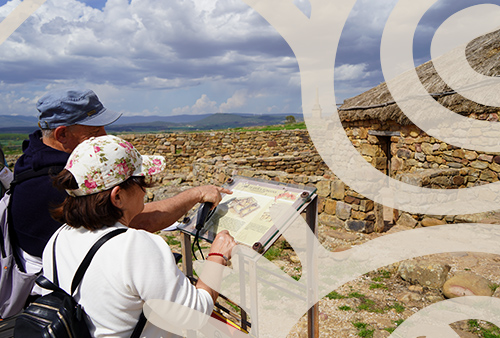
The visit follows a signposted circular route that begins and ends at the hermitage. It can be explored independently and usually takes between 60 and 90 minutes, although if you truly want to enjoy the experience, allow at least two hours.
The terrain includes uneven sections, the rock surface can be slippery, and there are many places worth stopping to appreciate.
This is what you will discover:
THE ROMAN WALL
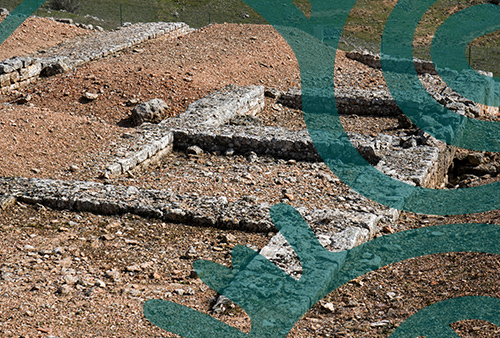
Before even reaching the hermitage, next to the access road, you will find the remains of the 3rd-century AD Roman wall. Built with carefully fitted stone blocks without mortar, it included defensive towers that reinforced the city’s protection.
The remarkable thickness of its walls reveals a period of growing instability, when the Roman Empire was beginning to weaken and inland cities needed stronger defences.
The wall reused materials from the surrounding area and incorporated the natural rock itself into the defensive perimeter, adding yet another layer to the long and fascinating history of Tiermes.
THE ROMANESQUE HERMITAGE OF NUESTRA SEÑORA DE TIERMES
Dating back to the 12th century, this Romanesque hermitage features a beautifully preserved porticoed gallery. It was built by master craftsman Domingo Martín, the same architect responsible for the Church of San Pedro de Caracena, so visitors to both sites will notice their shared artistic style.
Take a closer look at the capitals and the doorway: geometric patterns, plant motifs, fantastic animals, battle scenes, and biblical passages come together in an exceptionally rich decoration for a rural hermitage.
The circular route begins and ends here. It is also the perfect symbol of what Tiermes represents: a place that was never completely abandoned, but continuously inhabited, transformed, and given new meaning by different communities throughout the centuries.
THE ROCK-CUT GRANDSTAND
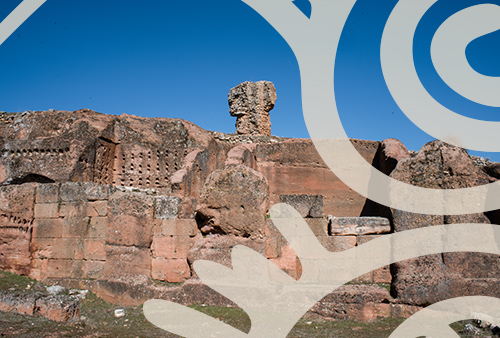
One of the first spaces you will encounter along the route, and also one of the most impressive. A series of stepped seating areas with an access staircase were carved directly into the rocky hillside.
There are no arches, no façade, and no masonry — only the natural rock, precisely carved and shaped with extraordinary skill.
What was its exact purpose? This is where the mystery begins. It may have been a theatre, an amphitheatre, a meeting area, or even a sacred space. No one knows for certain.
What is clear is that it perfectly reflects the essence of Tiermes: the landscape was not an obstacle — it was the raw material.
THE PUERTA DEL SOL GATE
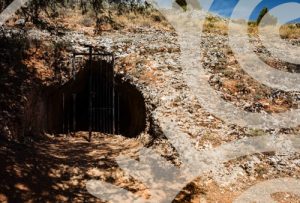
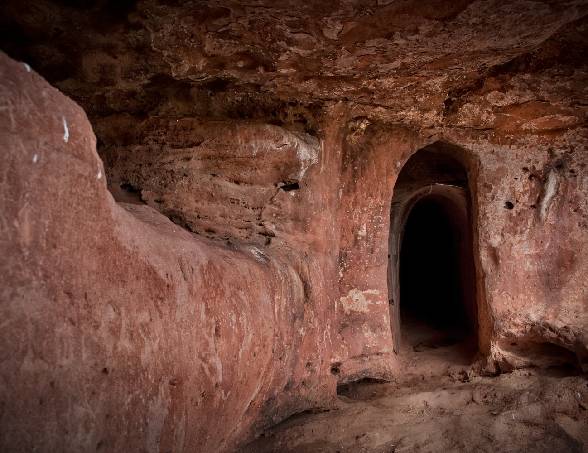
At one end of the rock-cut grandstand stands the Puerta del Sol Gate, one of the three known entrances to the ancient city. It consists of a passageway 40 metres long and barely 2.5 metres wide, carved directly into the rock.
Halfway along the route, there was once a double wooden gate, now lost, of which only the supports and hinge sockets carved into the stone remain.
The most striking detail lies beneath your feet: two perfectly visible parallel grooves, created by centuries of cart wheels wearing down the rock surface.
Seeing these marks creates a unique feeling — they are the physical, tangible traces of thousands of people who passed through this same place more than two thousand years ago.
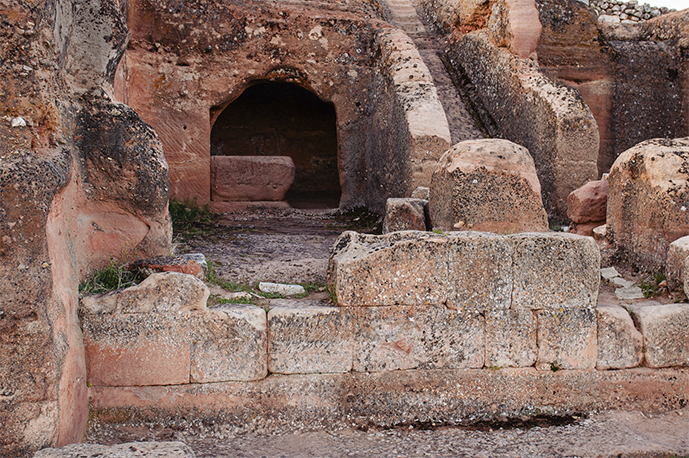
THE SOUTHERN ROCK-CUT COMPLEX OR HOUSES OF TARACENA
On the other side of the path, you will find a remarkable group of rock-cut houses whose origins date back to the Celtiberian period and which reached their greatest development under Roman rule.
The rear sections of these dwellings were carved directly into the stone, while the exterior areas were extended with masonry walls following Roman construction techniques. The houses featured two underground levels and two upper floors, with up to 11 rooms distributed across two areas connected by a steep staircase.
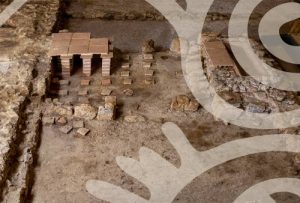
At the upper part of the complex, isolated remains of stone blocks are all that survive of the Roman Baths. Judging by what remains today, they must once have been an impressive structure.
THE HOUSE OF THE NICHES
Within this complex, the House of the Niches stands out for its four storage niches carved directly into the walls and its raised hearth, which included a small channel designed to collect ashes.
A seemingly small detail that reveals something much greater: nothing here was improvised. Every element had its purpose, its place, and its own practical logic.
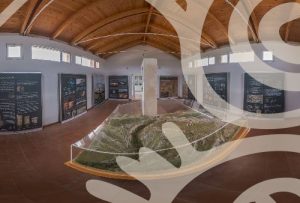
THE TIERMES MONOGRAPHIC MUSEUM: VISIT IT BEFORE ENTERING THE ARCHAEOLOGICAL SITE
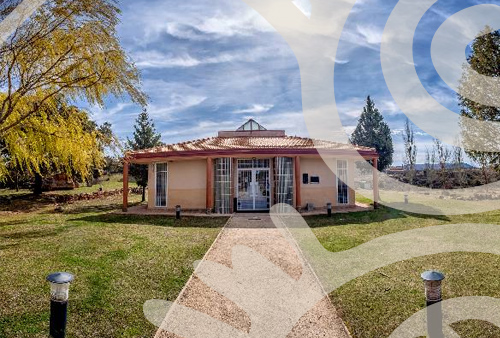
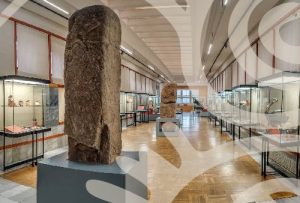
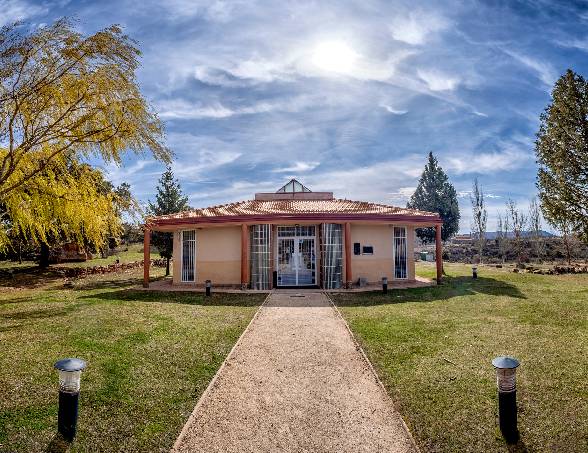
Located on the access road before reaching the archaeological site, the museum is the perfect place to begin your visit. Our recommendation is simple: stop here first. The difference between exploring Tiermes with this historical context and visiting it without it is enormous.
The museum displays domestic pottery, tools, construction elements, and everyday objects from the different stages of the city’s history. They may not seem spectacular at first glance, but they are essential for understanding what you will later discover carved into the rock.
After visiting the museum, you will begin to recognise spaces, functions, and routes that might otherwise go unnoticed.
Museum opening hours:
Summer (July to September):
Tuesday to Saturday: 10:00–14:00 and 17:00–20:00
Sundays and public holidays: 10:00–14:00
Winter (October to June):
Tuesday to Saturday: 10:00–14:00 and 16:00–19:00
Sundays and public holidays: 10:00–14:00
Closed on Mondays, except public holidays and the day before public holidays.
The archaeological site can be visited independently and free of charge from sunrise to sunset. During the summer season, guided tours are available with prior booking.
PRACTICAL TIPS BEFORE YOU GO
The entire visit takes place outdoors. Wear closed footwear with non-slip soles, as the route includes uneven ground and the rock surface can become slippery when wet.
During the summer months, remember to bring water, a hat, and sun protection, as much of the route has little or no shade.
Allow around 2.5 to 3 hours for the full experience if you include the museum. If you prefer to explore at a slower pace and stop along the way, you may want to spend even more time discovering Tiermes.
WHAT TO SEE NEAR TIERMES
Since you have made the journey, make the most of it. The surrounding area has so much more to offer.
Caracena is an essential stop. Located next to the Caracena River Canyon, it is home to one of the most remarkable Romanesque churches in Soria: the Church of San Pedro, built by the same master craftsman who created the Hermitage of Tiermes. The village also features an impressive medieval castle. From Caracena, you can follow the almost 6 km route to Valderromán or explore the Caracena River Canyon, one of the most beautiful hiking routes in the province and part of the GR-86 Soria Iberian Trail.
Rello is a small village declared a Site of Cultural Interest, perched on top of a hill and surrounded by its perfectly preserved walls. Its stone houses and medieval atmosphere make you feel as if you have stepped back in time.
San Esteban de Gormaz offers one of the finest Romanesque heritage collections in Castile, with the churches of San Miguel and Nuestra Señora del Rivero standing out as true architectural treasures.
Berlanga de Duero, declared a Historic Site, preserves an impressive castle of Islamic origin, several medieval gates, and the magnificent Collegiate Church of Santa María del Mercado.