






WHAT YOU'LL SEE AT THE UXAMA ARCHAEOLOGICAL SITE
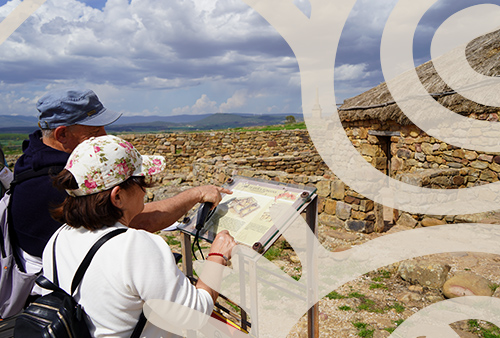
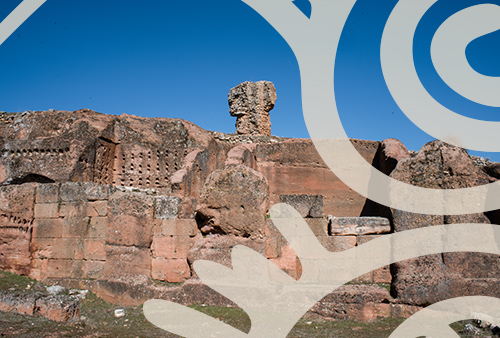
A visit to Uxama offers a clear insight into how a Roman city in the interior of the Iberian Peninsula functioned. The remains visible today mainly belong to the Roman city of the 1st century AD, the period when the settlement reached its greatest splendour.
These are the highlights you shouldn’t miss:
El foro
The heart of Uxama. Located on the upper platform of the hill, the forum was the political, religious, and social centre of the city.
Its construction required major terracing works, levelling the terrain with artificial fills reinforced by supporting structures. With its rectangular layout, the forum concentrated the main administrative buildings and was visible from different areas of the city.
At its centre, a temple dedicated to the imperial cult is believed to have stood. Beneath the open square, a cryptoporticus was built — an underground vaulted gallery used for storage, whose remains can still be identified at the archaeological site today.

THE HOUSE OF THE PLINTHS
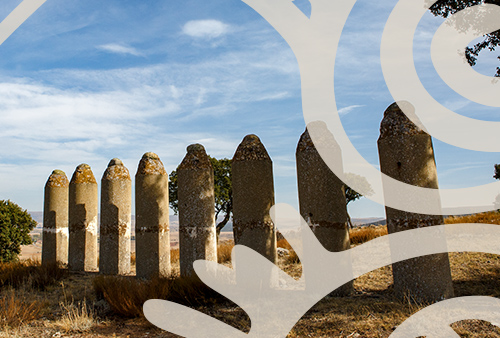
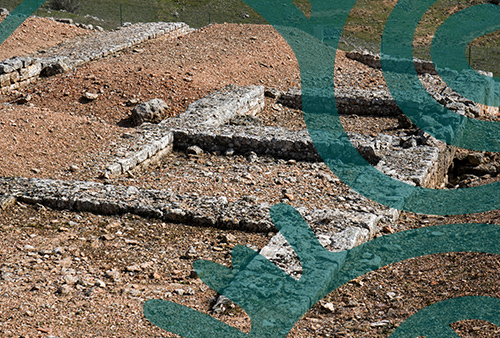
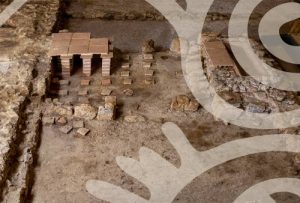
The only Roman house currently open to visitors in Uxama and one of the most impressive highlights of the route. Built during the reign of Emperor Claudius, it occupied an entire city block between two porticoed streets, covering almost 950 m².
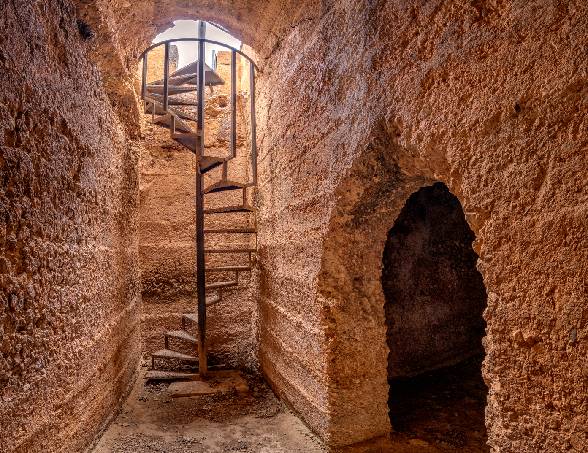
The house included more than twenty rooms, a garden, its own cistern, and a basement carved directly into the rock. Archaeological discoveries reveal a high level of comfort, including wall paintings, a rich collection of household objects, and a carefully organised layout that reflects the lifestyle of a wealthy family fully integrated into Roman culture.
THE HYDRAULIC SYSTEM AND CISTERNS
One of the most remarkable features of Uxama. The city had more than twenty water reservoirs designed for storage, including an impressive large semi-circular vaulted cistern with a capacity of around 300 m³.
This hydraulic system, remarkable for both its complexity and scale, reflects the advanced technical knowledge achieved by the city and the importance that Rome placed on water management as an essential element of urban infrastructure.
THE UNDERGROUND AQUEDUCT
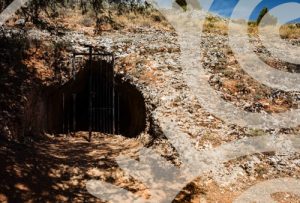
Visible at the foot of the northern slope of the hill, this underground aqueduct carried water from the source area of the Ucero River, approximately 18 kilometres away, to the city.
A remarkable achievement of Roman engineering, it ensured the water supply for the entire population and demonstrates the advanced infrastructure systems developed in Uxama. Today, traces of this impressive hydraulic work can still be appreciated at the archaeological site.
THE STREETS AND URBAN LAYOUT
The streets of Uxama followed the principles of Roman urban planning: a regular layout, clearly defined spaces, and a circulation system designed to organise public life.
Walking through them offers an insight into how Rome structured not only the physical space of its cities, but also social interaction and everyday life. From several elevated points along the route, visitors can enjoy wide views over the Ucero Valley, helping them understand the strategic logic behind the city’s location.
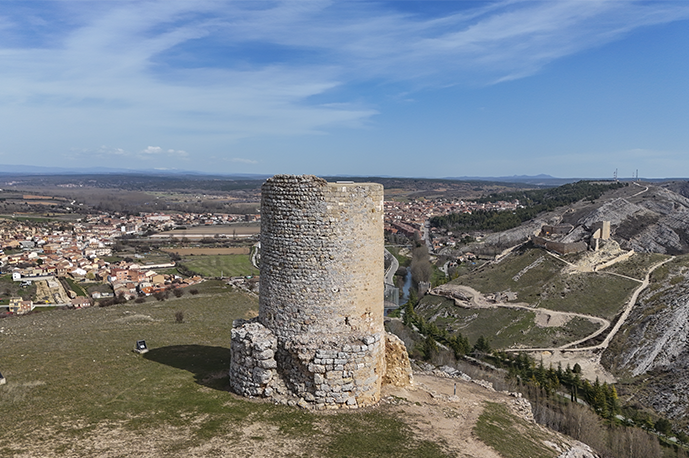
THE MEDIEVAL WATCHTOWER OF UXAMA
One of the most recommended stops during the visit. From this elevated position, visitors can enjoy commanding views over the Ucero Valley and the main natural communication routes of the surrounding area.
Looking out over the landscape from here helps explain why Uxama was built in this location: controlling the territory was not just an advantage, it was the very reason for the city’s existence.
In addition to its historical importance, the watchtower offers one of the most spectacular panoramic views of the archaeological site and its surroundings.
THE UXAMA ARCHAEOLOGICAL INTERPRETATION CENTRES
ARCHAEOLOGICAL INTERPRETATION CENTRE AT THE SITE
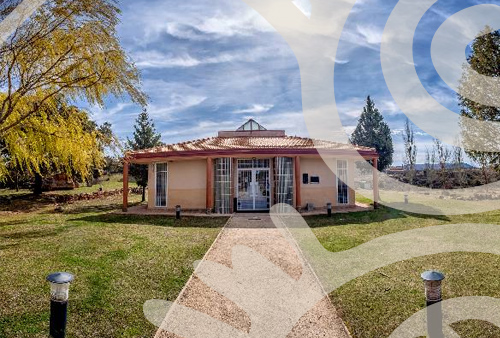
Located next to the archaeological site itself, this centre offers a clear introduction to the history of Uxama, its urban development, and its most important remains.
Visitors can explore it at the beginning of the route to better understand the site, or at the end of the visit to bring together everything they have discovered. Either way, it is well worth stopping here.
ANTIQUA OSMA ARCHAEOLOGICAL INTERPRETATION CENTRE
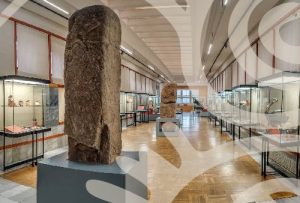
Located in the former Hospital of San Agustín in El Burgo de Osma, this centre is an essential stop for fully understanding the history and significance of Uxama.
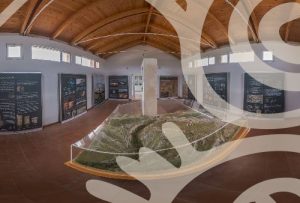
Through detailed scale models, reproductions, recreated spaces, audiovisual displays, and 3D projections, visitors can discover what the city looked like during its period of greatest splendour.
The exhibition also broadens the historical journey by exploring the medieval origins of Osma, connecting the ancient Roman city with the later evolution of the territory.
Visit it before climbing up to the hill — you will experience Uxama in a completely different way.
WHAT TO DO AND SEE NEAR UXAMA
Since you have made the journey, the surrounding area has much more to offer.
El Burgo de Osma is an essential stop after visiting Uxama. Its impressive Gothic cathedral, historic old town, and the Antiqua Osma Archaeological Interpretation Centre make it one of the most complete heritage destinations in Soria. Take your time to wander through its streets and discover its unique atmosphere.
Osma is the historic settlement next to El Burgo, with its medieval layout and remains of ancient walls. It is the perfect place for a peaceful walk, with views over the Ucero Valley and an ideal stop to complete your day.
Just a few minutes away, Ucero is the gateway to the Cañón del Río Lobos Natural Park, one of the most spectacular natural landscapes in Castile and León.
The perfect combination: archaeology in the morning, nature in the afternoon.